
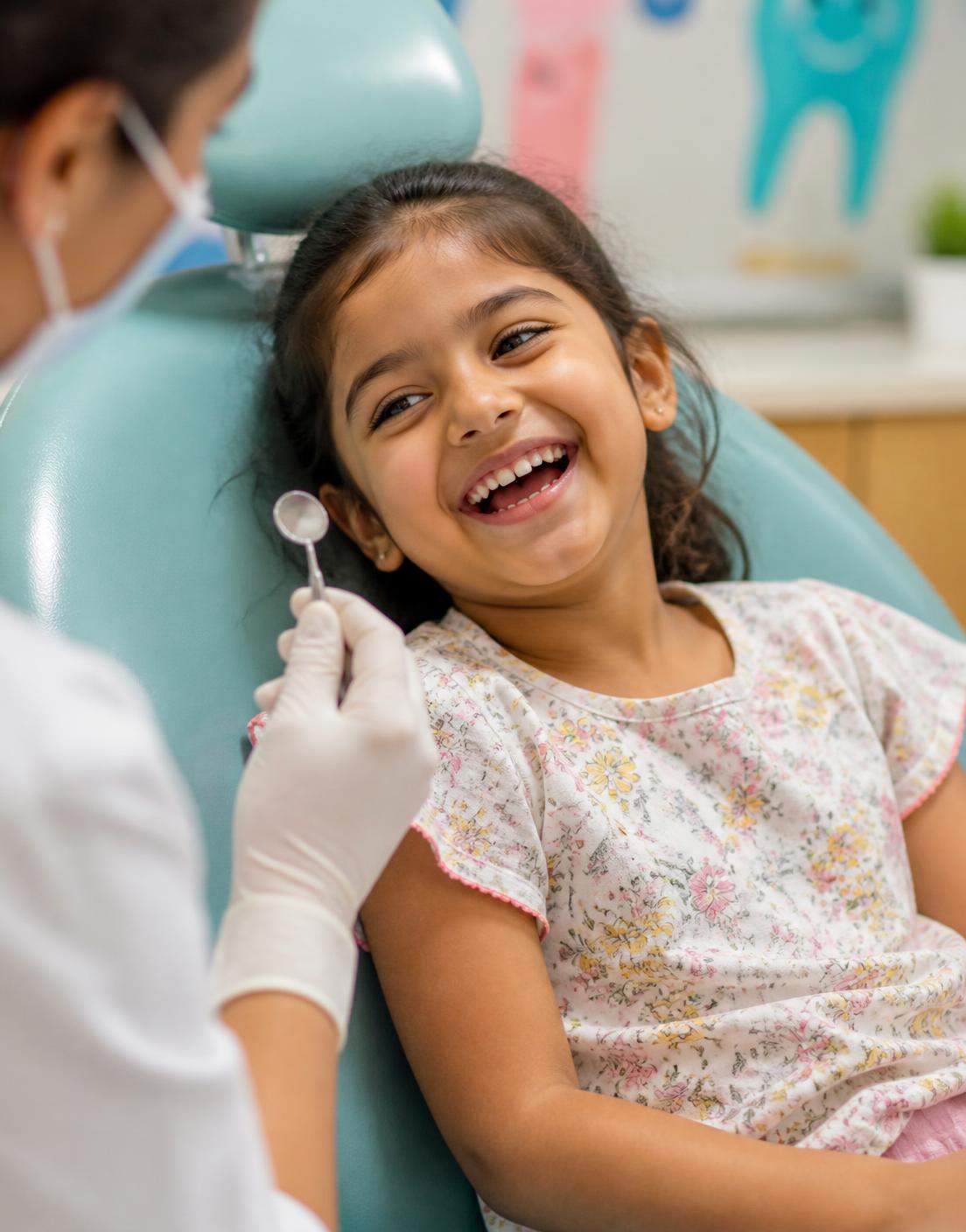
Most parents expect a first dental visit to be about treatment. In reality, an early appointment is mainly about looking, counting, measuring growth and teaching. It is short, gentle, and designed to make the next visit easier.
When should the first visit happen?
Widely followed paediatric dental guidance recommends a first dental visit when the first tooth appears, and no later than the child's first birthday. Waiting until there is visible decay or pain means the child's first experience of a dentist is linked to discomfort — which is exactly what early visits avoid.
What a first appointment usually includes
For a very young child, much of the visit happens with the child sitting on a parent's lap or beside them, not alone in the chair.
- A gentle look at the teeth, gums, jaw and bite
- Counting the teeth that have come through so far
- A check for early signs of decay, staining or enamel weakness
- Guidance on brushing technique, toothpaste amount and diet
- Answers to the questions parents actually have — thumb-sucking, bottles at night, teething, and dummy use
How to prepare your child at home
Children take their cues from the adult with them. Speak about the visit in neutral, positive words, and avoid promising that nothing will happen or using words like 'pain', 'injection' or 'drill' — even to reassure.
- Book a morning appointment when your child is rested
- Play 'dentist' at home: let them count your teeth with a spoon and a torch
- Read a picture book about visiting a dentist a few days before
- Bring a comfort toy if that helps them settle
- Let the dental team lead the conversation with your child during the visit
If your child is anxious
Anxiety at the first visit is common and not a problem. A calm 'meet and greet' appointment — where nothing more than a look and a chat happens — often does more good than a longer visit pushed too far. Progress is measured across visits, not in one sitting.
The short version
An early first visit is preventive, not clinical. The aim is a child who is comfortable in the chair long before any treatment is ever needed.
This article gives general dental health information and is not a diagnosis or a treatment plan for your child. For advice specific to your family, please speak to our team at the clinic.